
Cobb County Multi-Day Arrest Log
The Cobb County Sheriff's Office runs the official query through its JMS admissions report. The same endpoint powers a short booking window. For a multi-day arrest log, widen the begin and end dates. A week makes a fair comparison span. Keep expectations modest, though. The Sheriff does not label the output a weekly feed. Complete coverage of every arrest is not guaranteed. There is no archive. It is not laid out like old newspaper issues either.
The Sheriff and Adult Detention Center system own the report. It returns jail admissions, not every police contact in Cobb County. An incident with Cobb County Police or a city department may never produce a booking. The reverse happens too. Someone booked on an older warrant can appear in the admission table. That date may fall well after the underlying incident.
Read the Cobb County Blotter
Start a multi-day query with a clear question. A weekend review calls for one continuous date span. Careful comparisons need matching spans. Never set a full seven-day period against a partial week and call the gap a crime trend. The charge-category selector is another trap. Leave it broad on the first run, since its categories can exclude relevant rows.
- Open the admissions form and enter the exact first and last dates for the period being reviewed.
- Keep the first search unfiltered, then narrow by a listed charge category only if the research question calls for it.
- Write down the selected boundaries and the date the portal was accessed. Results can change after corrections or later data entry.
- Match a person with the SOID and date of birth where necessary, while avoiding needless republication of personal data.
- Check the court source for disposition and the active roster for current custody. Neither fact is settled by an old admission row.
The official admissions report shows how a week-long range appears once the query runs.
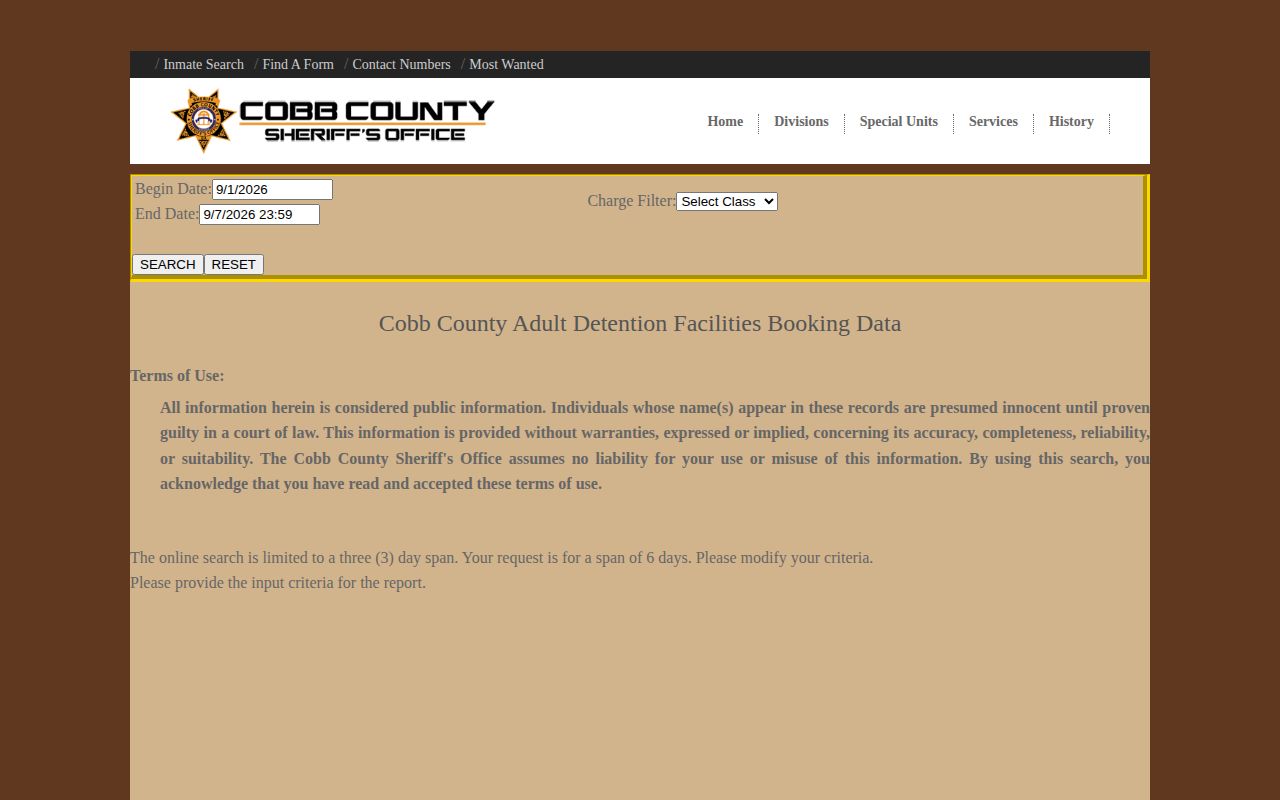
The table is built from the dates you choose. Any later review should weigh both the saved range and the day it was accessed.
Cobb County Arrest Log Fields
These are jail-operation fields. Nothing here gives an arrest narrative, a location, an officer name, or a final court ruling. A county or city incident report often holds more. Blank cells appear too, and the agency does not invite readers to guess at what they hide.
| Log field | How to read it |
|---|---|
| SOID and inmate name | Agency identifier and recorded name, useful for separating similar matches. |
| R/S and DOB | An unexplained portal abbreviation and a match aid. Do not invent an expansion for R/S. |
| Started | The displayed start of booking or admission processing, not a promised arrest timestamp. |
| Completed | A process field that can remain empty in the returned record. |
| Released | A release time when entered; an empty cell does not independently establish current custody. |
| Offense description | The charge wording as recorded at admission, still an charge. |
| Case or citation | A related identifier when supplied, which may help locate a later court record. |
| Bond amount | An amount shown for a charge when available, not a final judgment. |
| Photograph | No booking image appears in the Sheriff’s admissions report. |
A disposition is what happens to a case later. Dismissal, plea, or judgment all count. That result may not match the first charge label on the booking row. When a case or citation number is available, follow the matter through the proper Cobb court system.
Why Cobb Log Times Differ
The Cobb County Adult Detention Center page describes a large A, B, and C complex. Stated capacity is 3,077. The buildings went up in 1987, 1997, and 2010. The operation also spans records, medical care, transport, and work deployment, among other custody functions. That scale helps explain why the public table carries several times instead of one simple arrest date.
A person in Cobb County custody keeps moving. Intake follows the arresting agency. Then come medical runs, court transport, transfers, releases, and holds under other processes. The public row does not narrate any of it. Started, Completed, and Released must stay tied to labels. A wider Cobb County arrest log adds context around these shifts, but no timestamp becomes a full account of the event.
The detention-center page names the facility and the Records and Identification function behind these records.
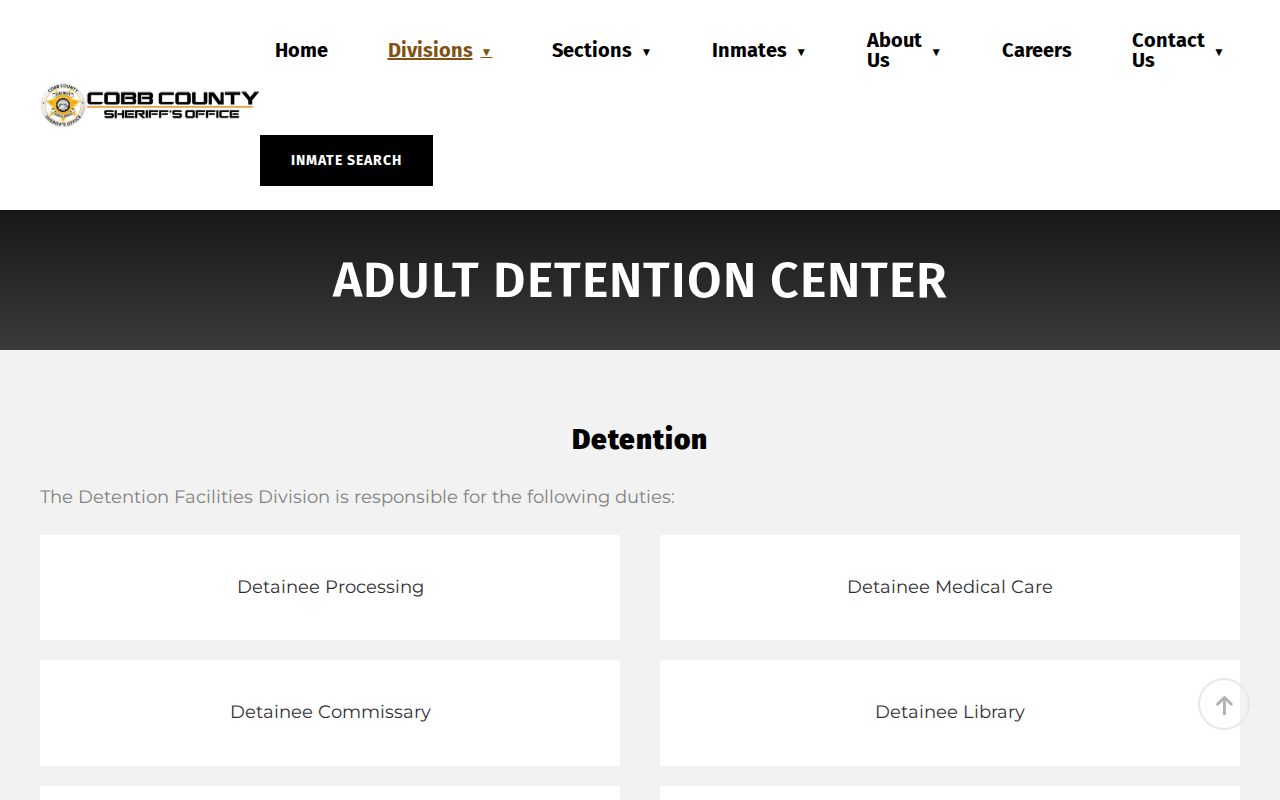
This is why the admissions log, police report, live roster, and court file stay separate sources. Each answers a different question.
Cobb Arrest News Is Secondary
Newspapers add story and detail that the Cobb County Sheriff's arrest table skips. The catch is selectivity. Cobb County Courier arrest coverage runs only when an event earns it, and the paper says little about who sits in the Cobb County jail on a slow Tuesday. The Courier's arrests section makes that editorial stance plain. It never claims a full accounting of bookings. For arrest warrants and police reports turned into blotter items, try East Cobb News crime and fire coverage. That lens has limits too. The paper serves East Cobb and unincorporated pockets, not the whole county.
Digging for older Cobb arrest stories? The Marietta Daily Journal archive reaches back through decades of felony-arrest blotter material built on warrants. Its paywall and irregular publishing pace make it a poor weekly feed, though. The Atlanta Journal-Constitution takes on big Cobb stories only. Treat all of these as complements to the jail roster. None replaces the Sheriff's own booking data.
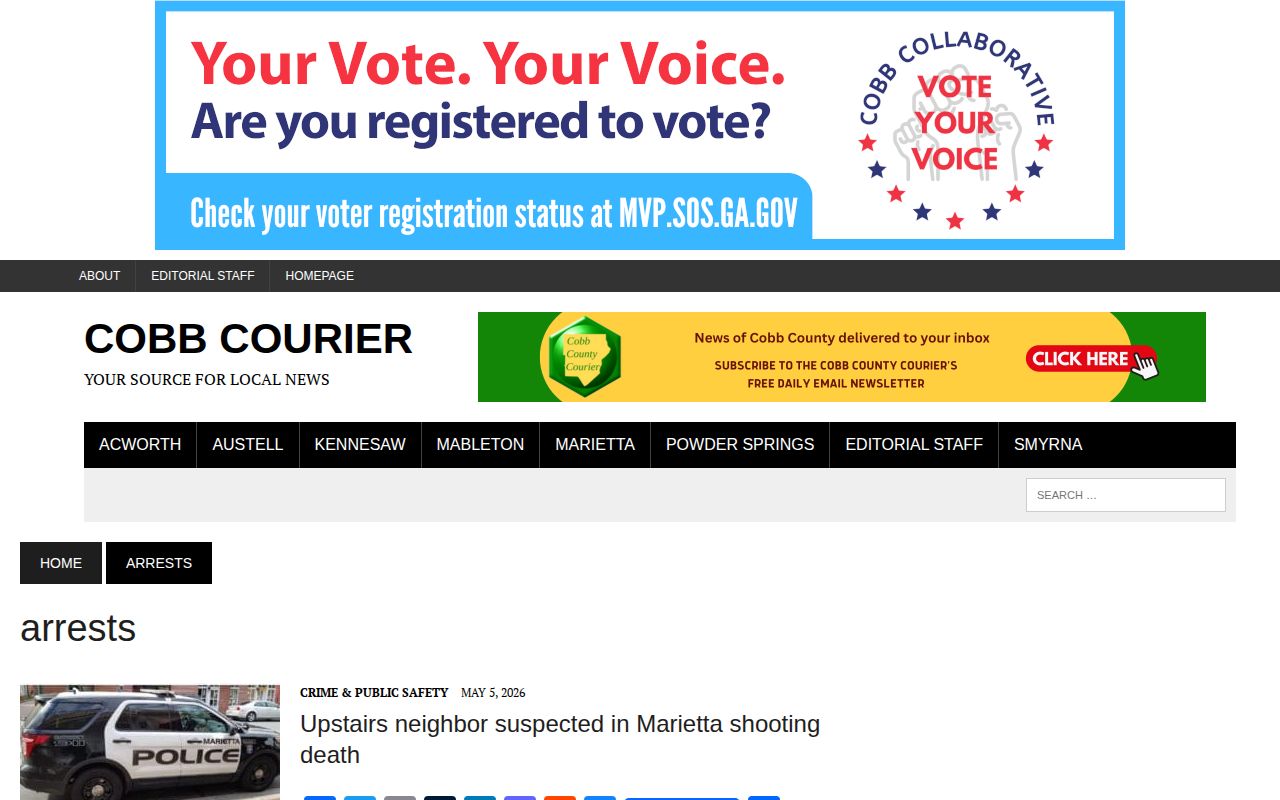
Use news coverage to understand a reported event. Then return to the originating agency for the underlying record. The court, not the newsroom, holds the outcome.
Note: News reports and unofficial indexes can be incomplete or stale, so an absence from them proves nothing about custody.
Cobb Arrest Counts Versus Names
Smyrna posts weekly public-safety reports. The totals cover arrests, traffic stops, citations, warnings, and service calls. Numbers describe agency activity. They never identify a person. No names appear, and no individual charges are listed. That keeps a count useful for trends alone. Across Cobb County, these figures come from channels that measure different things, since city police reports log incidents their own officers handled. The Sheriff's admissions report, by contrast, tracks entry into the detention system. Weekly totals summarize, and a news blotter picks highlights. Blend the four without labels and you get a false picture of how many people were actually arrested or jailed in Cobb County.
Cobb Arrest Archives and Retention
The public portal promises no fixed archive depth. An older date range may still return data. That is luck, not a promise. Georgia Archives keeps separate retention schedules. Jail booking records last ten years after release. Jail registers run ten years past the final entry. Incarceration lists are kept for one year, and arrest and booking summary statistics for five. Those periods govern what an agency holds, not what it displays online. A roster row can vanish while the Sheriff still keeps the record. A held record can contain protected fields. When an old range returns nothing, use the Sheriff's Open Records route and GOVQA. Give the name, the SOID if known, a narrow date span, and the record series, and ask Records and Identification whether the record is held, transferred, or disposed of under schedule.
The Cobb County Sheriff's Office sits at 1825 County Services Parkway, Marietta, GA 30008. Its main line is 770-499-4600. Records and Identification answers at 770-499-4231. A short-window question belongs on the 24 Hour Arrests page, and the Cobb County Recent Arrests hub covers the broader roster and record path.
Note: Retention, legal release, and online searchability are separate questions, and one answer never decides the other two.